
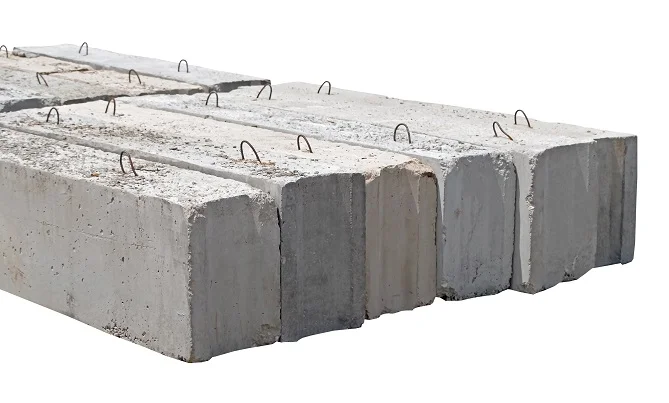
When you are planning to build a concrete slab for any type of area, it is necessary to know the weight of the concrete slab. When you know the weight, it is goin to be quite beneficial for you as it willis save your time and avoid unnecessary mistakes that you may cause during work.
When you plan your project efficiently using a concrete slab weight calculator to save time and get instant estimates. In this blog, we will provide some useful information so contractors and homeowners can make their dream project successful and stress-free.
Why Is It Important to know the Slab Weight?
A weight of a concrete slab is not simply a number:
- Structural load: The weight influences the amount of stress that the ground or the structure underneath can bear.
- Transport and logistics: Delivery trucks and lifting equipment should have the ability to carry the load.
- Cost and materials planning: Planning of quantity of weight assists in estimating the quantity of concrete required, and thus save on wastage.
- Safety and compliance: There are local building codes in which loading calculations are required to obtain permits.
To put this into perspectives 10 cm thick concrete slab measuring 5 meters by 3 meters can weigh roughly 3.6 metric tons. That almost weighs as much as a small automobile resting on your soil. There is a possibility of structural issues, or unwarranted cost, if you make the wrong decision.
How Concrete Weight Is Calculated
The concrete weight is primarily determined by the volume and density.
- Volume = Length Width Thickness.
- Weight = Volume x Density
In normal concrete, the density is about 2400 kg/ per cubic meter. (Approximately 150 pounds/ cubic foot). This is on normal cement, sand and gravel mixtures. Light mixes may be as low as 1400-1900 kg/m3, whereas heavy mixes may be more than 2500 kg/m3.
How to use a Concrete Slab Weight Calculator?
Here is what you can do:
Step 1: Determine dimensions of slabs
- You need:
- Length
- Width
- Thickness
An example would be a slab whose length equals 5 meters, width equals 3 meters and thickness equals 0.10 meters: its volume would be:
- Volume = 5 x 3 x 0.10 = 1.5 cubic meters
Step 2: Choose concrete density
For a standard mix, use 2400 kg/m3. Adjust when you have light and heavy concrete.
Step 3: Calculate slab weight
Weight =Volume X Density x – 1.5 m3 x 2400 kg/m3=3,600 kg. Or it can be about 3.6 tonnes.
Real-Life Examples
Here are some real life examples for your understanding:
Example 1: Small patio slab
A 4 meters by 2-5 meters and 0.10 meters’ thick patio:
- Volume = 1.0 m3
- Weight = 1.0 x 2400 = 2,400 kg (2.4 tonnes)
Your base would be under the weight of a large SUV. This information will be helpful in making sure that your base and soil are firm.
Example 2: Garage floor slab
- Slab garage floor, 20 ft x 15 ft, 4 inches thick (~0.33 ft):
- Volume =100 ft3
- Weight = 100 x 150 lb. = 15,000 lb. (~6.8 tonnes)
It is a huge slab and without the preparation of the foundation or soil, the slab may crack or sink in a crooked way. According to a study: Garage concrete floors in the U.S. average between 6-10 tonnes, which is based on the thickness and size.
Factors That Affect Slab Weight
According to a study, commercial concrete floors weigh more than 10 tonnes per 100 square feet that are usually 6-8 inches thick. The weight of a slab is influenced by the following factors.
- Type of concrete: Lightweight concrete will decrease the weight by up to 40 percent. It can be boosted by heavy aggregate mixes of 10-15.
- Reinforcement: The addition of steel rebar or mesh is a little more weight.
- Water content: Fresh concrete weighs more because of the content of water.
- Thickness and size of the slab: The larger the thickness, the larger the weight.
The International Institute of Nuclear Safety and Sources (1997), discovered that the residential garage slab located in an apartment building in Moscow experienced movement of the slab during a specific time period.
Case Study: Residential Garage Slab
The garage of a homeowner in Texas was scheduled to be a 6-inch-thick 24 ft x 20 ft slab. They placed the order of concrete without estimating the weight of the slabs.
- Dimensions.: 24 x 20 ft, thickness 6 in (~0.5 ft)
- Volume = 24 x 20 x 0.5 = 240 ft3
- Weight = 240 x 150 lb./ft3 = 36,000 lb. (16.3 tonnes).
The contractor knew that the soil on the premises was sandy and had low load carrying capacity of 12 tonnes per 100 ft 2. Thoughtless, the slab would have been in danger of cracking and settling. Moreover, without any modification of the foundation and without the soil being compacted. Through concrete slab weight calculator, they managed to:
- Pouring Before pouring, increase soil compaction.
- Enhance the slab with additional rebar.
- Enhance the mix to decrease the weight by a small margin using a partially lightweight aggregate.
The result? The slab was strong and durable. It was able to support the weight without any cracks or settlement even after two years. Builders that compute slab weight and modify foundation design report as many as 80% fewer post-pour repairs than that which does not.
Practical Uses of a Slab Weight Calculator
The information about the slab weight is useful in many respects:
- Transport and delivery: Determine the number of truckloads to buy.
- Structural design: Engineers are able to screen whether the load can be supported by the footing, beams, and foundations.
- Budgeting: With proper weight estimates, we will not be ordering excess concrete or underestimating concrete.
- Safety and compliance: Says your slab is in compliance with local building codes and structural requirements.
You may make cross checks with official standards such as those issued by the U.S Department of Housing and Urban Development (HUD) that cite standard values of concrete density cast and the building design practice. https://www.huduser.gov/Portal/Publications/pdf/residential-old2000.pdf
Plan Your Project with Confidence: Calculate Your Slab Weight Today
It might not appear that the process of estimating the weight of slabs is significant. However, the results of this process do exist in terms of safety, cost, and construction quality. Concrete slab weight calculator will help you to be aware of what you are working with before the first shovel gets into the ground. You will save time, money and stress and build something that goes through with the right planning!
FAQs
What is the weight of 1 cubic meter of concrete?
Concrete weighs approximately 2,400kg or something like 2.4 tonnes.
What density to I assume slab weight to be?
Concrete with normal weight is approximately 2400 kg/m3, lightweight concrete may range between 1400 and 1900 kg/m3, and heavy ones may be over 2500 kg/m3.
What is the effect of reinforcement on the weight of the slab?
When steel is added, the weight is slightly raised. In most slabs, the variation stands at 5-10, however, in the case of highly reinforced floors, it may be higher.
Is it possible to trust online calculators?
They work well as used in coarse estimates. In the structural work, one should always check with an engineer.

Alex Morgan is a home improvement enthusiast from the U.S. who loves simplifying complex calculations for builders and DIYers. At TogCalculator.com, Alex shares easy-to-use guides and accurate calculator tools that help homeowners plan smarter projects. His goal is to make construction math simple, reliable, and stress-free for everyone.