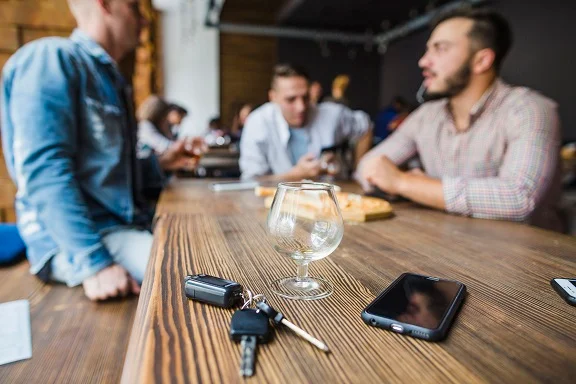
Have you ever woken up in the morning after a night out, unsure if you are legally impaired or not? This often happens to most people. Every person who drinks, whether it is you, should know how long will alcohol stays in your system, and this is very important.
No matter what it is, for a job screening, a visit to the doctor, or merely for personal safety. Many people think that a strong cup of coffee or a few hours of sleep may clear their system, but the biological reality is far more intricate.
The quick answer is that although after a few hours you could seem sober. Alcohol stays visible in your body much longer than its physical effects last. Your liver processes toxins at a constant rate as per your health and nothing can accelerate its speed.
Understanding Your Blood Alcohol Concentration (BAC)
A Blood Alcohol Concentration (BAC) is the percentage to specify the quantity of alcohol in your system. An example is that a BAC of 0.08 indicates that your blood has a volume concentration of 0.08 of alcohol. This is the legal driving limit in the United States.
Surprisingly, the process of how your body processes alcohol is linear. The average metabolism of the body is approximately one one-hour drink.
When you consume alcohol at a rate exceeding that of your liver, the BAC will continue to climb. A BAC calculator can be used to approximate your present levels and to get an accurate idea of the BAC level. The result will be on the basis of your weight and the number of drinks you have had so far.
Detection Windows for Different Tests
Alcohol is retained in different body parts at varying durations depending on the chemical.
- Blood Tests: The alcohol normally clears the blood in 6-12 hours. To get a rough idea of when your blood is likely to be clear, a BAC calculator is a nice thing to have.
- Breathalyzers: This treatment tests alcohol vapor in your breath and it can trace consumption up to 12 to 24 hours.
- Urine Tests: Standard tests are positive within 12 to 48 hours. Nonetheless, more sophisticated EtG tests have the ability to identify up to 80 hours.
- The Hair Follicle Tests: This is the long-term memory of the alcohol testing. It is able to identify alcohol intake up to 90 days.
Factors That Affect Alcohol Metabolism
Not all people process a glass of wine in a similar manner. There are a number of biological reasons that alter the rate at which you sober up.
- Weight and Body Composition: Alcohol is drawn towards water. Individuals with larger body mass tend to have more surplus water to dissolve the alcohol.
- Biological Sex: Women generally have less enzyme required to digest alcohol. It generally means that they have a higher BAC even though they may consume the same amount as a man.
- Dietary Intervention: Eating is the solution. It is because before drinking, you can slow the process of alcohol absorption into the blood, and avoid a sharp peak.
- Age: The older we are, the slower the liver and the whole metabolic rate decelerate. Therefore, it also takes longer to get toxins out of the system.
Case Study: Know How Long Will Alcohol Stay In Your System
To get an idea of how these numbers work out, we will examine a 2024 observation of a 180-pound male. He went to a dinner and took four regular craft beers within a time span of four hours.
At midnight, his BAC reached 0.09. This BAC exceeded the legal limit. He went home and slept for seven hours. He woke up fresh, but still had a BAC of 0.015 percent. He was fresh, but the alcohol was still present in his system. He can be spotted by a high-sensitivity alcohol detection test.
The person was not over the legal drinking age and could also be subject to a zero-tolerance policy.
This case study indicates that being sober does not mean being alcohol-free.
The 2024-2025 Legal Landscape
By 2025, the legislation on alcohol impairment will even become stricter. As per the recent statistics given by the National Highway Traffic Safety Administration (NHTSA). Even low doses of alcohol, that is much lower than a 0.08 percent threshold, can greatly decelerate reaction times.
A number of states are now imposing high BAC penalties. Some jurisdictions require a BAC of more than 0.15% to receive a far more severe mandatory jail term, and to use an ignition interlock device.
Can You Speed Up the Process?
There is much barroom wisdom as to how to get alcohol out of your system more quickly. You may have heard that a cold shower or black coffee will work.
The fact of the matter is that there is nothing like a speeding-up liver. Coffee does not affect your BAC; it may cause you to feel more awake. Your levels will reduce only with time. If you find yourself in a scenario where you require to know whether you are safe or not, it is best to wait. However, starting with a BAC calculator is always a good idea.
Final Words
Ultimately, everybody has an inbuilt clock for handling alcohol their body. A blood test may come out clean the following morning but your hair and urine tell you the tale far much longer. The ability to know how long alcohol stays in your system is not only about passing a test. It is also about making the correct choices and be safe. Even though a BAC calculator is a wonderful aid to an estimate, always prioritize time and caution.
FAQS
Does drinking water help you get sober faster?
No, drinking water does not help you get sober fast and has no role in lowering the alcohol level in the blood.
Can I fail a drug test for alcohol two days later?
Yes. In case it is an EtG test of urine, it is able to detect alcohol metabolites up to 80 hours after the last drink.
How long does one beer stay in your system?
One standard beer stays for one hour in your system, but it is detectable in your urine after a couple of days.
Why does a BAC calculator ask for my gender?
BAC calculator asks for gender because biological sex greatly impacts the level of alcohol and its time of staying in the blood. There is always a variation seen in the BAC level of two different genders taking the same amount of drink.

Alex Morgan is a home improvement enthusiast from the U.S. who loves simplifying complex calculations for builders and DIYers. At TogCalculator.com, Alex shares easy-to-use guides and accurate calculator tools that help homeowners plan smarter projects. His goal is to make construction math simple, reliable, and stress-free for everyone.