By using this site, you agree to the Privacy Policy and Terms of Use.
Accept

Calculator

Power in Every Digit

  • Home
  • Financial calculator
  • Fitness & Health Calculators
  • Contact us
© 2022 Foxiz News Network. Ruby Design Company. All Rights Reserved.
Reading: Sakrete Concrete Calculator – How to Figure Out Exactly How Much You Need
Share
Font ResizerAa

Calculator

Power in Every Digit

Font ResizerAa
Search
  • Home
  • Financial calculator
  • Fitness & Health Calculators
  • Contact us
Have an existing account? Sign In
Follow US
© 2020 - 2026 TogCalculator. All Rights Reserved.
Blogs

Sakrete Concrete Calculator – How to Figure Out Exactly How Much You Need

Alex Morgan
Last updated: December 3, 2025 8:19 pm
Alex Morgan
Share
Sakrete Concrete Calculator
SHARE

Sakrete Concrete Calculator – How to Figure Out Exactly How Much You Need

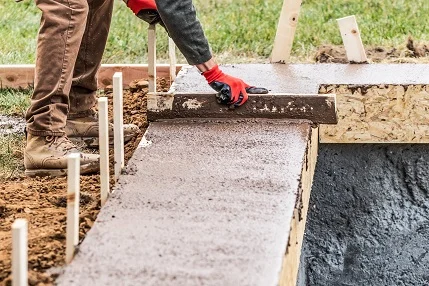
When you are about to pour a slab, construct a walkway, or repair a small foundation, one of the biggest concerns is, how many bags of concrete do I need? That’s when the use of a concrete calculator, particularly designed using bagged mixes such as Sakrete Concrete Calculator, would be a clever choice. It assists in transforming length, width, depth, and bag yield into an understandable materials estimation.

Contents
  • Why Use a Sakrete Concrete Calculator?
  • Understanding Bag Yield
  • How to Use the Calculator? Step‑by‑Step
    • Example
  • Residential Driveway Replacement Case Study
      • Calculation for Sakrete concrete
      • Bag Requirement
      • Outcome:
  • When Bagged Concrete Makes Sense and When It Doesn’t
    •  Good for bagged concrete
    • Better to get ready-mix
  • Common Pitfalls and How the Calculator Helps
  • Quick Tips for Fine Quality Concrete Work
  • FAQs
    • How accurate is the Sakrete concrete calculator?
    • Why does a Sakrete bag specify 0.60 cubic feet, but what I get is less on-site?
    • Is bagged concrete less expensive than ready-mixed?
    • Can the calculator be the only source of information I can rely on for big projects?

Why Use a Sakrete Concrete Calculator?

Why should you use a concrete calculator? The answer is simple: if you take a rough estimate, there are only a few chances that you will buy the exact number of bags for the work. 

When you follow your guessing estimate, you will either end up buying too many or too less. What is next? Buying too many will leave you with a number of extra bags that may go to waste, a worse situation because you spent your money fo the material that is of no use. Conversely, buying too little and having to go back to the shop again, a time-consuming process, and also involves extra charges for going, transportation, and no concession in buying a very small number of materials again.

A Sakrete concrete calculator provides you with:

  • A quick response to the question of how many bags do I need?
  • Assistance on the budgeting side. The bagged concrete tends to be less costly when dealing with a small project.
  • An improved sense of waste or overage you will require in spillage, irregular shapes or additional thickness.

Concrete happens to be one of the most used building materials worldwide. The US produces over 100 million tons of ready-mix concrete every year. Moreover, small projects like patio or driveways can consume several hundred pound per project.

Understanding Bag Yield

You have to be aware of how much concrete one bag of Sakrete will produce after mixing. That is much before you even touch the calculator. 27 cubic feet is a cubic yard. 

If we follow this, you should know that 45 of the 80 lbs bags will make this volume.

Or about 60 of the 60 lbs bags.

That comes in handy when you need a bigger job or when you are comparing the bagged or the ready-mix. Studies show that around 30% of small DIY concrete projects fail or run over budget due to miscalculating material quantities. Using a calculator helps avoid that.

How to Use the Calculator? Step‑by‑Step

The following is how you would normally do it by using a Sakrete concrete calculator.

Measure the area to fill: The longer side and the wider side. Measure these in feet.

Choose depth: Choose the depth of the place you need. How thick do you want? If you have chosen in inches, e.g., 4 in, 6 in, then divide by 12 to get feet.

Find: Find out the volume by multiplying the three measurements in feet. 

Volume (ft 3) = length x width x depth (ft).

Select bag volume: divide total volume by yield per bag.

To make it easier, the vast majority of online tools automatically perform this math and usually add a little bit more (5-10) of waste.

Example

Think that you are building a slab, 10 ft x 8 ft, and 0.333 ft.

Volume = 10 x 8 x 0.333 = 26.64 ft3

If you use 80 lbs bags, it will be 0.60 ft3 per bag

Bags needed = 26.64 / 0.60= 44.4 – round up to 45 bags

If you use 60 lbs bags, this is 0.45 ft3 per bag

Bags needed = 26.64 / 0.45= 59.2 – round up to 60 bags

You would also order an extra 5-10 per cent to take into consideration for extra use, which can go to waste or be used for denser parts.

Residential Driveway Replacement Case Study

A homeowner of a residential area in Kansas City desired to rebuild an existing 20 ft x 24 ft driveway. 

The concrete slab was to be 6 in thick. The customer chose a bagged Sakrete concrete rather than ready-mix to save money and to overcome the delivery limitations.

Calculation for Sakrete concrete

  •   Area = 20 x 24 = 480 ft2
  •   Depth in feet = 6 / 12 = 0.5 ft
  •   Volume = 480 x 0.5 = 240 ft3
  •   Divide 240 by 27= 8.89 cubic yards.

Bag Requirement

  •   Using 80 lbs bags: 1 cubic yard = 27 / 0.60= 45 bags
  •   Total bags needed = 8.89 x 45=400 bags
  •   Extra added 10% waste: 440 bags have been bought.

Outcome:

The two helpers and the homeowner were able to mix and pour the concrete on two weekends.

  •   The calculator assisted in preventing under-ordering.
  •   There was a very limited left over of 8 bags upon completion.
  •   Cost savings over off-the-shelf truck delivery: about 600, that is, with labor modifications.

The case demonstrates that the concrete calculator may assist in planning more extensive projects. It helps avoiding expensive errors. Therefore, making sure that there are enough materials available.

When Bagged Concrete Makes Sense and When It Doesn’t

This is where you should select bagged concrete (with calculator assistance). And this is where you may have to rethink.

 Good for bagged concrete

Smaller ones: Patios, footings, sidewalks, small slabs – less than one cubic yard.

Restricted access working areas: Tiny yards, stairs, slender lanes, an easy place to transport bags.

Budget awareness: Bagged mixes may be cheaper when you only require a few bags as opposed to renting a truckload.

Better to get ready-mix

Massive slabs or foundation pours – at past ten cubic yards, it is a tedious and all-consuming job to mix by hand.

When consistency is important, ready-mix tends to pour more consistently, has more slump control, and fewer problems with setting time.

Where speed is an issue, a truck can deliver and pour; bags require mixing water, labor, and time.

Interestingly, surveys of home improvement projects show that up to 40% of small concrete pours experience issues with strength or cracking. It is mostly because of incorrect mix ratios or bag miscalculations. This is why using a calculator can be beneficial.

Common Pitfalls and How the Calculator Helps

People are not that accurate, even with a calculator. Here’s how to avoid them:

Miscalculation of depth – in case your slab is slightly thicker than you had intended, you suddenly find yourself needing fewer bags than you thought.

Omitting the waste factor – addition of 5-10% to cover spillage, uneven ground or additional thickness will spare you the “oh-no” experiences.

Excess or insufficient compaction– this lowers real yield and strength. Actual yield in most cases will be slightly lower than the optimal yield shown.

Calculations using metric measurements – calculators usually work with feet/inches. In case your plan is metric (such as meters, cm), be careful before feeding numbers.

Quick Tips for Fine Quality Concrete Work

Here are some quick tips to follow:

In general, always round up when buying bags. It’s always better to have a little more than not have enough and look for it.

It is important to get 5-10% more than your estimate to be on the safe side in case of shortage due to any reason. Moreover, prepare only the quantity you can pour and finish in about an hour, since concrete sets fast.

Water should be used very carefully: in excess, it can make the mix weaker and reduce the actual quantity you get.

Take your time to consolidate and smooth the concrete properly. Not doing so can lead to air pockets being left behind, resulting in less strength, while the surface will have an effect too.

For authoritative guidance on concrete best practices and durability, the National Park Service provides a detailed resource. This includes guidance on proper mixing, application, and historic preservation uses.

FAQs

How accurate is the Sakrete concrete calculator?

A very accurate one, given that the correct dimensions are input and a little extra is purchased for waste. However, mixing consistency and compaction are the real-world factors that can change the yield.

Why does a Sakrete bag specify 0.60 cubic feet, but what I get is less on-site?

The “0.60 ft³” is based on perfect conditions (correct water, good mixing, and perfect compaction). If the mix is wetter or not compacted, or there is form leakage, the yield is reduced.

Is bagged concrete less expensive than ready-mixed?

Yes, bagged concrete is less expensive for small projects that are less than 1 cubic yard. In larger projects, it becomes an expensive option.

Can the calculator be the only source of information I can rely on for big projects?

No. For large pours, calculators are useful for rough planning purposes. But, when volume and structural requirements grow, it’s best to consult a pro or to order ready-mix.

Alex Morgan
Alex Morgan

Alex Morgan is a home improvement enthusiast from the U.S. who loves simplifying complex calculations for builders and DIYers. At TogCalculator.com, Alex shares easy-to-use guides and accurate calculator tools that help homeowners plan smarter projects. His goal is to make construction math simple, reliable, and stress-free for everyone.

Understanding Blood Alcohol Level Calculators – A Practical Guide for Everyday Safety
What is the Concrete Demolition Cost Calculator & How to Use it for Different Projects?
Concrete Retaining Wall Calculator for 2025 Projects
Alcohol Intoxication Calculator Explained with BAC level
What BAC Is Drunk? A Simple Guide Everyone Can Understand

Sign Up For Daily Newsletter

Be keep up! Get the latest breaking news delivered straight to your inbox.
[mc4wp_form]
By signing up, you agree to our Terms of Use and acknowledge the data practices in our Privacy Policy. You may unsubscribe at any time.
Share This Article
Facebook Copy Link Print
Share
ByAlex Morgan
Follow:
Alex Morgan is a home improvement enthusiast from the U.S. who loves simplifying complex calculations for builders and DIYers. At TogCalculator.com, Alex shares easy-to-use guides and accurate calculator tools that help homeowners plan smarter projects. His goal is to make construction math simple, reliable, and stress-free for everyone.
Previous Article Cubic Feet in Yards of Concrete All About Cubic Feet in Yards of Concrete
Next Article Concrete Calculator Cost Concrete Calculator Cost – A Simple Way to Plan Your Project
Leave a Comment

Leave a Reply Cancel reply

Your email address will not be published. Required fields are marked *

Latest News

Starbucks Calorie Calculator for Smart Coffee Choices
Blogs
Part D Penalty Calculator: Easy Guide to Avoid Extra Costs
Blogs
Corn Yield Calculator: Simple Way to Check Your Harvest
Blogs
Reinforcement Steel Calculator for Accurate Rebar Estimation
Reinforcement Steel calculator to Get an Accurate Estimate of Rebar
Blogs

You Might also Like

concrete stair calculator
Blogs

How to Use the Concrete Stair Calculator to Calculate the Concrete Volume for Your Stairs

Alex Morgan
Alex Morgan
11 Min Read
post hole concrete calculator
Blogs

Post Hole Concrete Calculator – How Much Concrete Your Fence Posts Actually Need

Alex Morgan
Alex Morgan
11 Min Read
concrete floor cost calculator
Blogs

Understanding the Concrete Floor Cost Calculator Comprehensively

Alex Morgan
Alex Morgan
14 Min Read
CalculatorCalculator
© 2020 - 2026 Calculators. ING All Rights Reserved.
  • Home
  • Contact us
  • About Us
  • Privacy Policy
  • Disclaimer
  • Terms and Conditions
Join Us!
Subscribe to our newsletter and never miss our latest news, podcasts etc..
[mc4wp_form]
Zero spam, Unsubscribe at any time.
Welcome Back!

Sign in to your account

Username or Email Address
Password

Lost your password?