Concrete Slab Reinforcement Calculator: The Ultimate Guide
Concrete slab is reinforced to ensure that it neither cracks nor experiences loads. A concrete slab reinforcement calculator converts the basic slab sizes and design options into a straightforward list of rebar lengths, numbers, and estimated weight. This guide explains the inputs that are important, the math and general spacing guidelines and tips that can be used so you can get correct takeoffs, before you purchase material or even call a supplier. In case you need to get a quick online check, you can use TogCalculator to calculate scenarios in seconds.
- What concrete slab reinforcement calculator does
- Basic requirements and basic rules to observe
- How the calculator does the math
- Common spacing and placement rules
- When you need one layer and when you need two
- Lap splices, cutouts and edge bars
- How to use the calculator for cost and ordering
- Practical example to make it concrete
- Common mistakes to avoid
- Final planning checklist before you buy reinforcement
- FAQs
What concrete slab reinforcement calculator does
A concrete slab reinforcement calculator requires slab length, width and thickness, bar size and spacing, and cover or clear distance between surface of a slab and the rebar. With that information, the tool calculates the number of bars that will run in each direction, the number of line feet of rebar, and the weight of steel to be ordered by pounds or tons. Other calculators include lap splice length as well as allow modeling of 2 layer mats or additional bars around edges and openings. This will transform an abstract drawing to a shopping list and a guest estimate of the cost.
Basic requirements and basic rules to observe
Measure the length and width of the slab, in feet. If you are going to use a bar, select the size of the bar, i.e., number 3, 4, and 5; and select the distance between the bars, i.e., 12, 18, or 24 inches on center. Enter the concrete cover so the tool knows how close bars sit to the surface. Good calculators let you add laps and waste percentages so the final numbers match what suppliers will expect. Using accurate inputs gives a reliable result that you can check with contractors.
How the calculator does the math
First, the calculator divides the slab dimension by the spacing to calculate how many bars run in each direction. Then it multiplies the bar count by the bar length and adds any lap splice length. The totals for both directions are added to give the total linear feet. Finally, the tool multiplies linear feet by the bar weight per foot to get the pounds of steel needed. Many rebar tables and rebar quantity calculators show standard weights per foot for each bar size and calculators use those weights so you can order steel by weight. For convenience, many builders use online rebar calculators that show both piece counts and weight instantly.
Standard weight tables show, for example, that a #4 rebar weighs about 0.668 pounds per linear foot. That number is handy when you convert total linear feet to a purchasing weight for supplier quotes.
Common spacing and placement rules
Rebar spacing for flat slabs often ranges from 12 to 24 inches, depending on load and slab use. Many residential slabs use 18 to 24 inch spacing while up close spacing, such as 12 inches appears in heavier duty slabs or engineered floors. For placement, it is common practice to locate rebar at about one quarter to one third of the slab thickness measured from the bottom so the steel sits in the tensile zone when the slab is loaded. These are practical rules of thumb, but always follow engineer’s specifications for structural work.
When you need one layer and when you need two
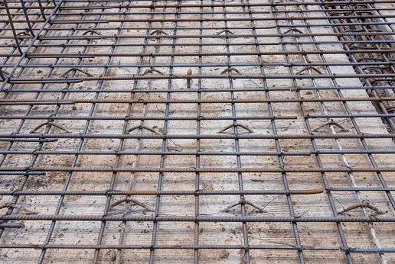
Small patios and typical residential slabs often use a single grid of reinforcement near the mid or lower portion of the slab. Heavier slabs, industrial floors and slabs with high loads may require two layers of reinforcement spaced vertically with chairs or spacers to hold them in position. A concrete slab reinforcement calculator that supports two layers helps you capture both quantities and their combined weight.
Lap splices, cutouts and edge bars
Most designs require lap splices where bars overlap to transfer load. The required lap length usually depends on bar diameter and design rules but calculators let you add a standard lap length or a custom value. Account for cutouts and openings by measuring those areas and subtracting them from the slab area so the tool does not overcount bars that would pass through holes.
How to use the calculator for cost and ordering
Once you have the total weight of steel with the help of a rebar weight calculator, you can ask suppliers for a quote per pound or per ton. Some suppliers prefer piece counts, so the calculator output should include both pieces and rebar weight per foot. Add five to ten percent for waste and cutting losses, and round up when ordering. If you plan to pick up, check bar length availability since many suppliers stock common lengths and may charge for cutting.
Practical example to make it concrete
Picture a 20 foot by 30 foot slab with #4 bars at 18 inch spacing in both directions and a one inch cover. A calculator will compute how many #4 bars cross the 20 foot side and how many cross the 30 foot side, then multiply those counts by the corresponding lengths. It will add lap lengths if you set them and then multiply total linear feet by 0.668 lb/ft to give the total pounds of #4 rebar required. Run the same slab with 12 inch spacing to see the extra steel and cost. For fast scenario testing, try TogCalculator to switch spacing or bar size in seconds and see how the material list changes.
Common mistakes to avoid
Do not forget to include lap splice lengths. Do not use center to center spacing without confirming whether you need an extra bar at the edge. Double check the cover so bars do not end up exposed. Break oddly shaped slabs into smaller rectangles and add them up instead of assuming one simple grid fits everything. Finally, add a waste allowance to the calculator output and reinforcement takeoff input.
Final planning checklist before you buy reinforcement
Measure slab dimensions and decide bar size and spacing, along with total linear feet rebar input. Choose cover and lap splice length. Run the numbers through a concrete slab reinforcement calculator to get counts and weight. Add five to ten percent for waste and cutting. Compare supplier quotes by weight and piece count. For a quick second opinion, run scenarios in TogCalculator so you can compare bar sizes and spacings instantly. Having neat takeoffs in hand speeds ordering and avoids delays on pour day.
FAQs
How many bars of rebar is necessary to lay a concrete slab?
Enter slab length, width, bar spacing and size in a concrete slab reinforcement calculator. The measuring tool will provide the bar counts and total linear feet that you convert to weight. In the case of structural slabs, refer to an engineer.
What is the distance between the rebar in a slab?
The space is usually 12-24 inches with a variation based on the slab usage and the loading. The spacing of residential slabs is normally 18 to 24 inches, whereas heavy slabs are closely spaced. Critical slab check engineering specifications.
Rebar placement in a concrete slab?
The rebars are normally laid at the lower third of the slab thickness to be resistant to tensile forces when load occurs. The grid is placed in the right position using chairs and spacers prior to the pour. In special designs, refer to the structural drawings.
Do I need rebar in a 4 inch slab?
Slabs involving the use of light use can utilize wire mesh rather than complete rebar mats, although when the slab involved is going to support vehicles or heavy loads, the specification may include rebar or other heavier reinforcement. Load bearing slabs should always be checked with local practice or an engineer.

Alex Morgan is a home improvement enthusiast from the U.S. who loves simplifying complex calculations for builders and DIYers. At TogCalculator.com, Alex shares easy-to-use guides and accurate calculator tools that help homeowners plan smarter projects. His goal is to make construction math simple, reliable, and stress-free for everyone.