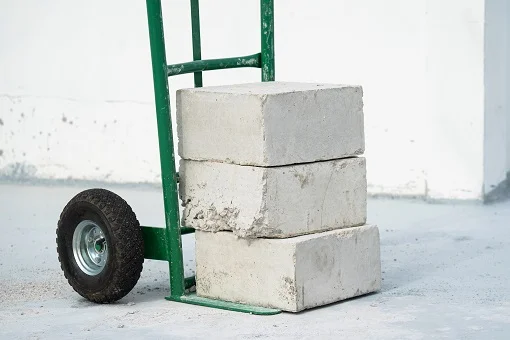
A Practical Guide to Using a Weight of Concrete Calculator for Any Project
It is important to know how much concrete you need before starting any project. It saves a lot of time, effort and money. Moreover, gives you peace of mind, which is million dollars. That’s exactly why the weight of concrete calculator has become a necessity in today’s time. It helps you figure out the exact amount of concrete required by slabs, columns, footings and driveways.
- Why a Weight of Concrete Calculator Matters?
- How a Weight of Concrete Calculator Works?
- Real Example: A Small Patio Project
- Case Study: How One Homeowner Saved $380 Using a Concrete Weight Calculator
- Why Accurate Concrete Weight Matters on Construction Sites
- Rules and Load Limits in Transportation
- Structural Planning and Safety
- Cost Control and Budgeting
- Weight of Concrete by Type
- Normal-Weight Concrete
- Lightweight Concrete
- High-Strength Concrete
- Using the Calculator for Different Project Types
- Revised Data and Standards 2024-2025
- What to Look for in a Reliable Weight of Concrete Calculator
- FAQs
This calculator is even useful for a small repair job around the house. Many people search for ways to calculate the volume and weight of the concrete to avoid hassles in future. So, whether you are a contractor or a new homeowner. You will find useful tips in this blog.
Why a Weight of Concrete Calculator Matters?
Majority of the construction problems do not just occur randomly. They tend to trace back to something minor such as wrong calculations of materials. By knowing what weight and volume of concrete you need in your project, you will save time and minimize waste.
Moreover, stay within your budget at the beginning of the project. These figures are immediately provided by a Weight of Concrete Calculator. It measures, does the calculations and informs you how many cubic yards or cubic meters you will need.
A survey from construction materials (2024) revealed that almost 11% of small-scale concrete construction projects had more than their estimated volume. It was due to inaccurate measurements. That is one of the primary causes why homeowners spend an excessive amount of money on concrete.
How a Weight of Concrete Calculator Works?
The tool itself is simple. You enter the:
- Length
- Width
- Height or thickness
- And it works out the precise amount of volume that your project requires.
Fresh concrete is about 2400kg/cubic meter or 4000 pounds/cubic yard. Several calculators are based on these revised density numbers extracted by 2024-2025 ASTM standards. According to industry statistics, more than 70% of concrete suppliers today charge by the cubic yard plus weight delivery charges. So, you must have the correct figures before placing an order. The calculator helps you:
- Know the quantity of concrete to be ordered.
- Know the estimate weight of the load.
- Plan labor
- Ensure that your site is accessible to trucks.
- It eliminates guesses and provides a solid point of reference to plan.
Real Example: A Small Patio Project
Let’s imagine, it is a 10-feet by 10-feet backyard patio that you are constructing with a thickness of 4 inches. When you put in these numbers on a Weight of Concrete Calculator, it will tell you the following:
- Volume: 1.23 cubic yards
- Weight: About 4,900 pounds (2.45 tons)
Majority of the individuals make guesses or approximate numbers. This frequently leads to excessive ordering. They do not save money, but they are left with unused concrete.
Case Study: How One Homeowner Saved $380 Using a Concrete Weight Calculator
One of the examples is a homeowner of Illinois preparing a driveway extension in 2024, a 12×14 ft area. His first manual estimation was of about 3 cubic yards. He had a digital Weight of Concrete Calculator offered by a local supplier before making the order. The calculator showed:
- Required volume: 2.27 cubic yards
- Estimated weight: 9,080 pounds
He would have paid an additional 0.73 cubic yards had he ordered 3 yards. He would have wasted at a local average price of $520/ cubic yard (2024 Midwest pricing).
- 0.73 x $520 = $379.60
The one tool saved him nearly four hundred dollars and saved more than half a ton of left-over material going to waste. Cases such as these are not unique, particularly as concrete prices have increased 6.4% since 2023, as tracked by the U.S. construction cost trend reports.
Why Accurate Concrete Weight Matters on Construction Sites
Concrete weight does not have an impact on ordering alone. It has an impact on nearly all planning levels.
Rules and Load Limits in Transportation
Most nations have become strict on road weight regulations. Federal regulations, in the U.S., limit standard truck loads to 80,000 pounds, with vehicle weight. A congested truck of concrete may lead to punishment or delays or refusal of the delivery. Being aware of the weight precludes such issues.
Structural Planning and Safety
Load-bearing calculations rely on weight estimations by the engineers. The weight of a concrete is included in all of the structural equations, beams, and foundations included. Precise weight minimizes risks in the future such as cracking and settlement.
Cost Control and Budgeting
Concrete is expensive. Any slight overestimation will cost hundreds of dollars. A calculator saves your money and keeps waste minimized.
Weight of Concrete by Type
Not any concrete has the same weight. There are various concentrations that employ diverse aggregates and densities.
Normal-Weight Concrete
- Density: 2,300-2,400 kg/m3
- Slabs, driveways, sidewalks.
Lightweight Concrete
- Density: 1,600-1,800 kg/m3
- Applied in multi-Storey buildings and insulation.
High-Strength Concrete
- Density: 2,400-2,500 kg/m3
- Applied in high load and bridge structures.
These differences make proper calculators necessary.
Using the Calculator for Different Project Types
Projects in concrete are diverse and the calculator accommodates the majority of the shapes.
Slabs
Perfect driveway, flooring, patios. You simply take length, width and thickness.
Footings and Foundations
These need to be profound and wide. They take more concrete than one would expect.
Columns
Round or square columns have a slight variation in formulas. The majority of the calculators have both options.
Stairs
Stairs consist of riser height, tread width and the number of steps. It is tiresome to compute it manually. Everything is made easy by the calculator.
Revised Data and Standards 2024-2025
The latest references are the basis of modern concrete calculators:
- ASTM C29 density standards
- ACI 318 building code rules
- Revised American weight-limit limits.
- 2024-2025 environmental regulations of waste materials.
The figures are standardized to ensure that your calculations remain consistent.
If you want verified density standards or concrete-related industry data, you can explore the US construction census authoritative link.
Common Mistakes People Make When Calculating Concrete
Mistakes do occur even with tools. A calculator must:
- Left out the conversion of inches into feet.
- Rounding numbers early
- Omission of waste percentage (normally 5-10%)
- Measured on one side of an area that is not even.
- Disregard of slopes, or grade differences.
These kinds of mistakes are avoided through double-checking.
What to Look for in a Reliable Weight of Concrete Calculator
A good calculator should have:
- Support metric and imperial units
- Use updated density values
- Handle multiple project types
- Show weight and volume
- Give clear calculations
FAQs
How accurate is a Weight of Concrete Calculator?
It’s very accurate if your measurements are correct. Most use updated 2024–2025 density values.
Can it be used for large projects?
Yes. Contractors and engineers use them for foundations, slabs, columns, and more.
Should I add extra concrete?
A 5–10% waste factor is usually recommended to cover small errors or surface irregularities.
Does concrete’s weight change after curing?
Yes, cured concrete becomes slightly lighter as moisture leaves the mix.
Do these calculators work with different concrete types?
Most tools let you select normal-weight, lightweight, or high-strength mixes for better accuracy.

Alex Morgan is a home improvement enthusiast from the U.S. who loves simplifying complex calculations for builders and DIYers. At TogCalculator.com, Alex shares easy-to-use guides and accurate calculator tools that help homeowners plan smarter projects. His goal is to make construction math simple, reliable, and stress-free for everyone.